Reverse engineering with Claude: Opus, Sonnet and Claude Code projects
This page lists every project in the directory where Anthropic's Claude did part of the reverse engineering, through a Claude model such as Opus or Sonnet or through the Claude Code agent. Claude is the most common model in the directory. Most of these projects ran Claude Code in a terminal, where it can call disassemblers, decompilers and other command line tools, and many connected it to Ghidra, IDA or Binary Ninja through an MCP server. The work spans game decompilation and ports, firmware and Bluetooth devices, private APIs, app analysis and defensive malware research. Many authors give the specific model version, and some report time spent and token cost. Where they do, it is listed on the project page. The usual pattern is the same across targets: Claude reads code and writes notes quickly, while the person sets goals, checks results and steps in when the model guesses. Each entry links the original writeup or repo.
- Projects
- 44
- Outcomes
- Works26Partial4Research14
- Models used
- Claude44GPT7Gemini1
The projects
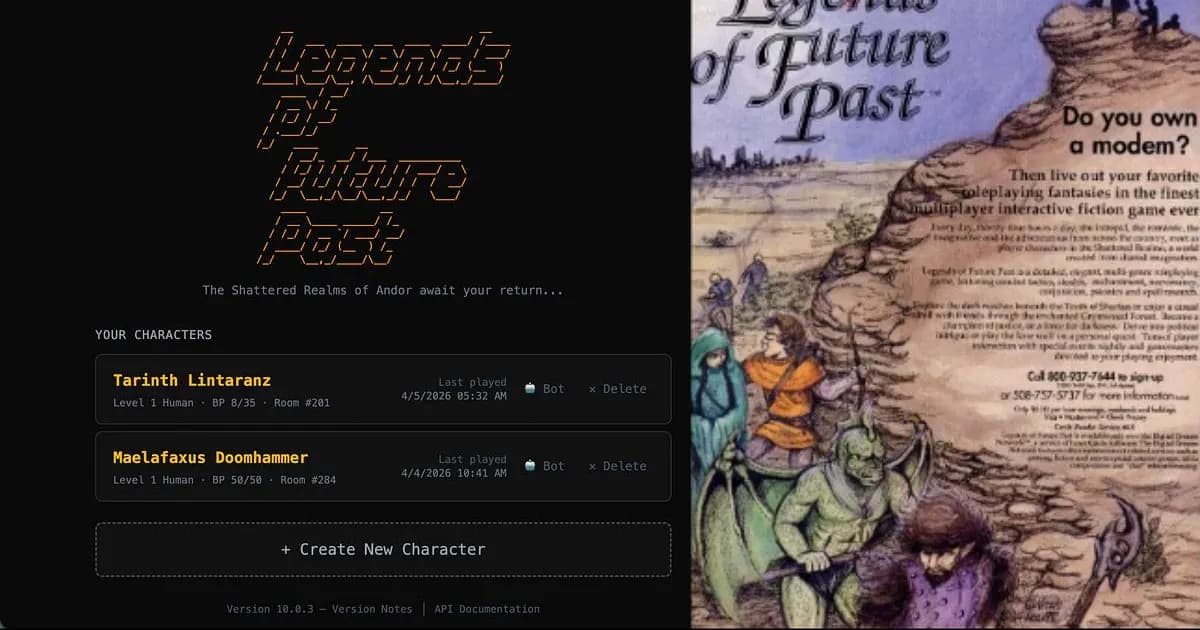
Resurrected a 1992 MUD from its scripts, a GM manual and a 1996 session log
A MUD dead since 1999, playable again from its scripts and an old log.
600+ billion tokens: an agent swarm decompiled a first-person shooter
15+ agents, three months, 99% of a shooter rebuilt in C++.
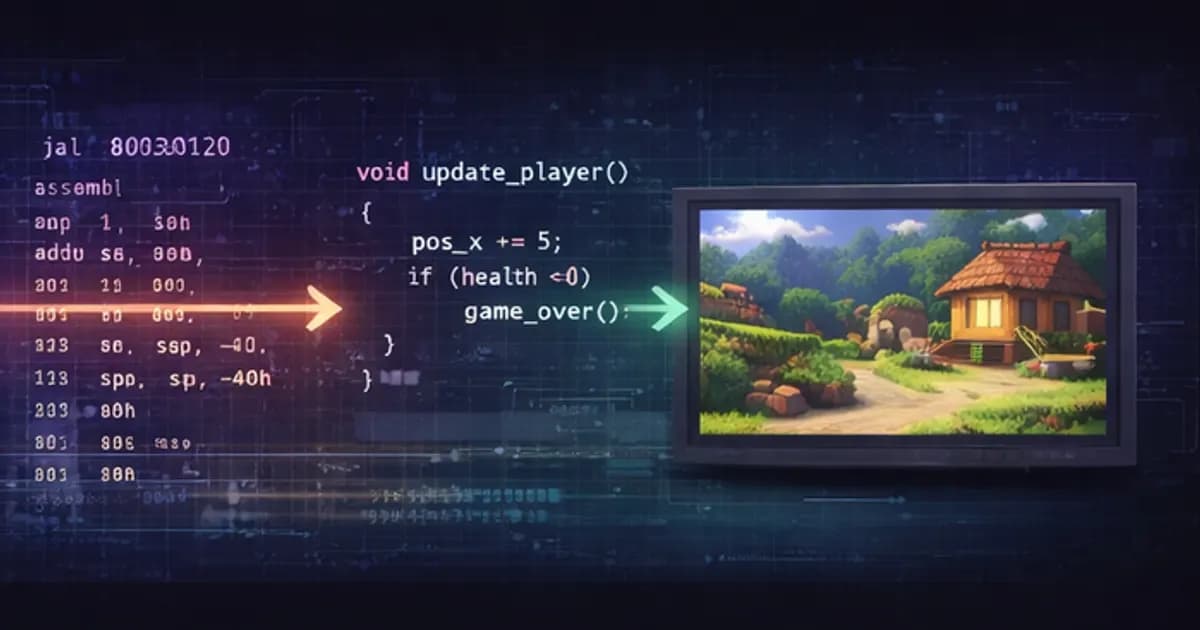
Built a PS1 static recompiler with no prior experience and got Tomba! playable
No prior experience, three weeks, and a PS1 game running as native code.
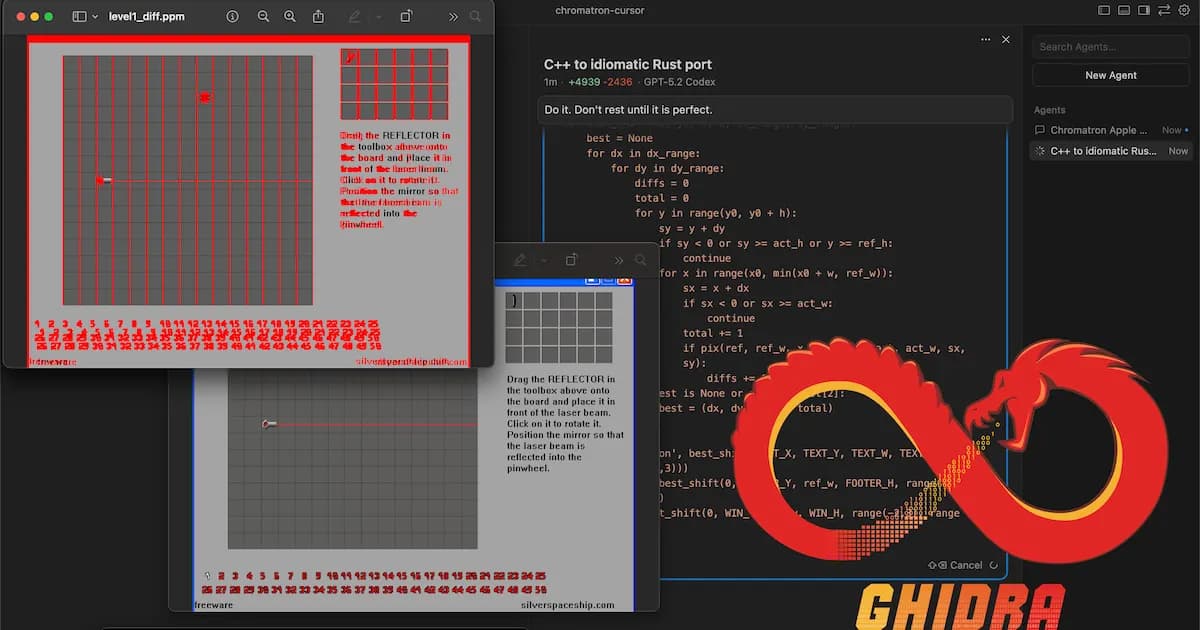
Recompiled a 20-year-old puzzle game for Apple Silicon and the web
A 20-year-old puzzle game, running natively on Apple Silicon and in the browser.
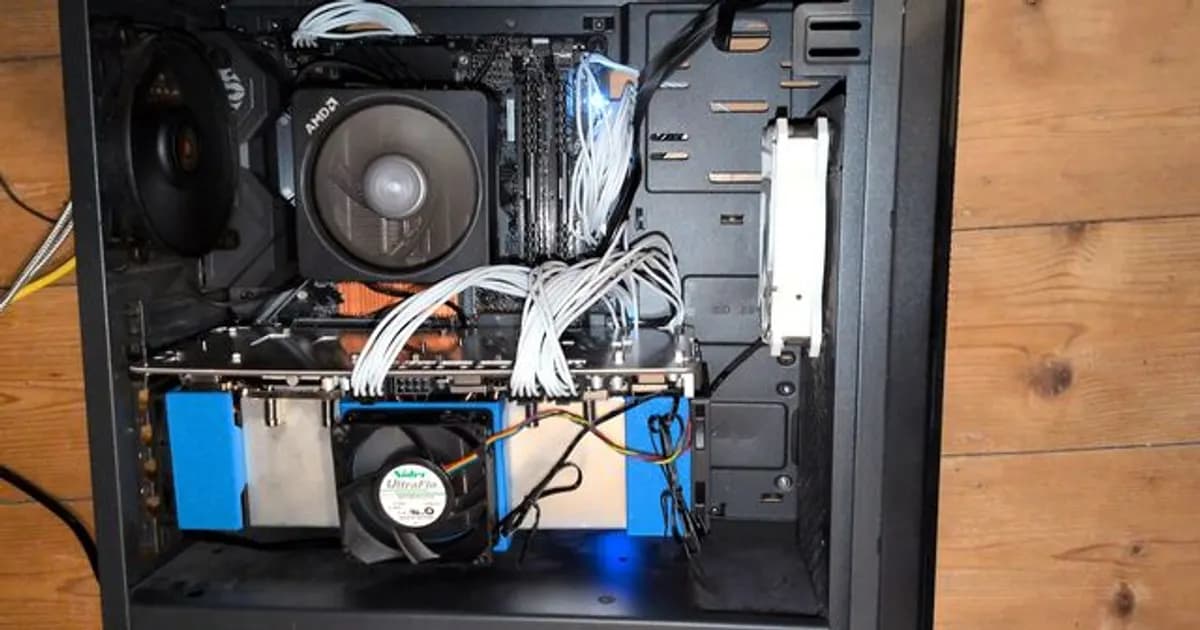
Replaced a dead fan-controller MCU on a dual V100 board with an RP2040, Claude doing the reverse engineering
A dead fan controller swapped for an RP2040 in about 50 minutes.

I asked Claude Fable 5 to reverse engineer a 1993 DOS game with no source code. It read the raw machine code, rewrote the engine in C, and gave me a fully editable port for every platform. 30 min from EXE to iPhone. Sharing it all so you can revive your own childhood games!
Rewrote the SkyRoads engine in portable C from raw machine code with Claude Fable 5

I used Claude Code to reverse-engineer the Claude macOS Electron app and had Cowork dig around in its own environment - now I've got a good idea of how the sandbox works It's an Ubuntu VM using Apple's Virtualization framework, details here:
Worked out how Claude Cowork's sandbox is built by having Claude Code inspect Claude.app
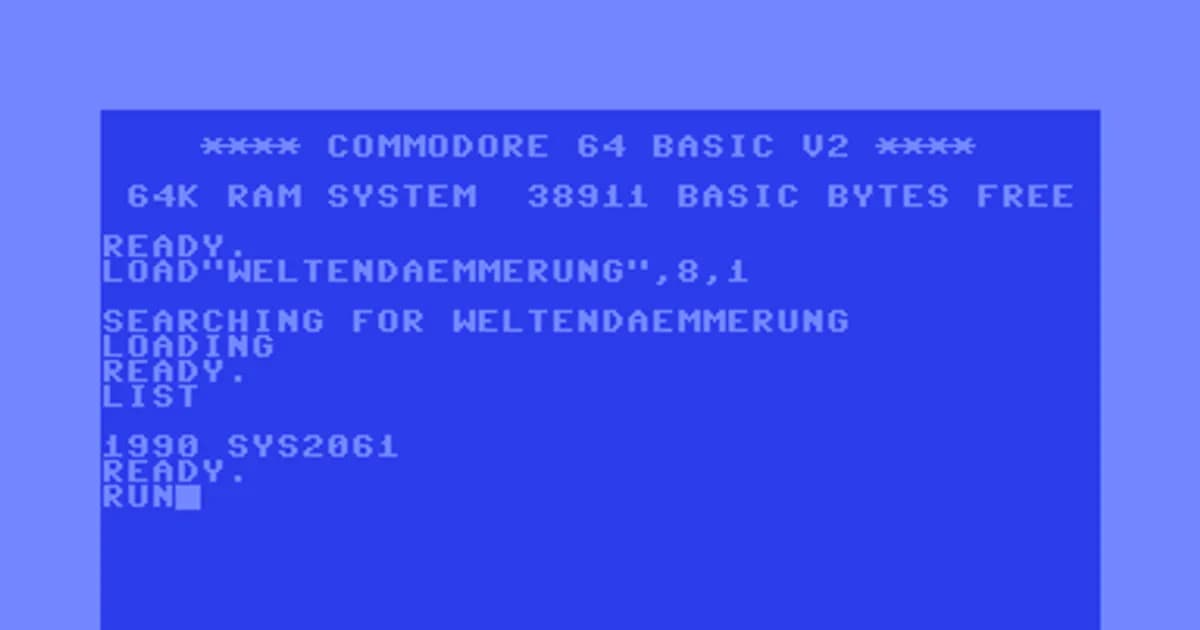
Reverse engineered the C64 strategy game Weltendämmerung and ported it to the web
A 7 KB C64 binary, three days and $100 later, playable in the browser.
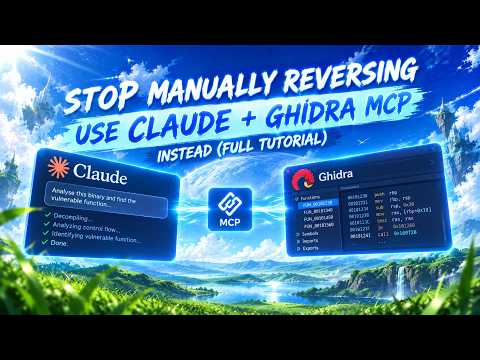
Full tutorial: Claude and Ghidra MCP work through a CrackMe
Set up Ghidra MCP and let Claude work through a CrackMe.

REA demo: rebuilding a compiled iPhone app's screen with and without REA
REA versus no REA, on rebuilding a compiled iPhone app's screen.
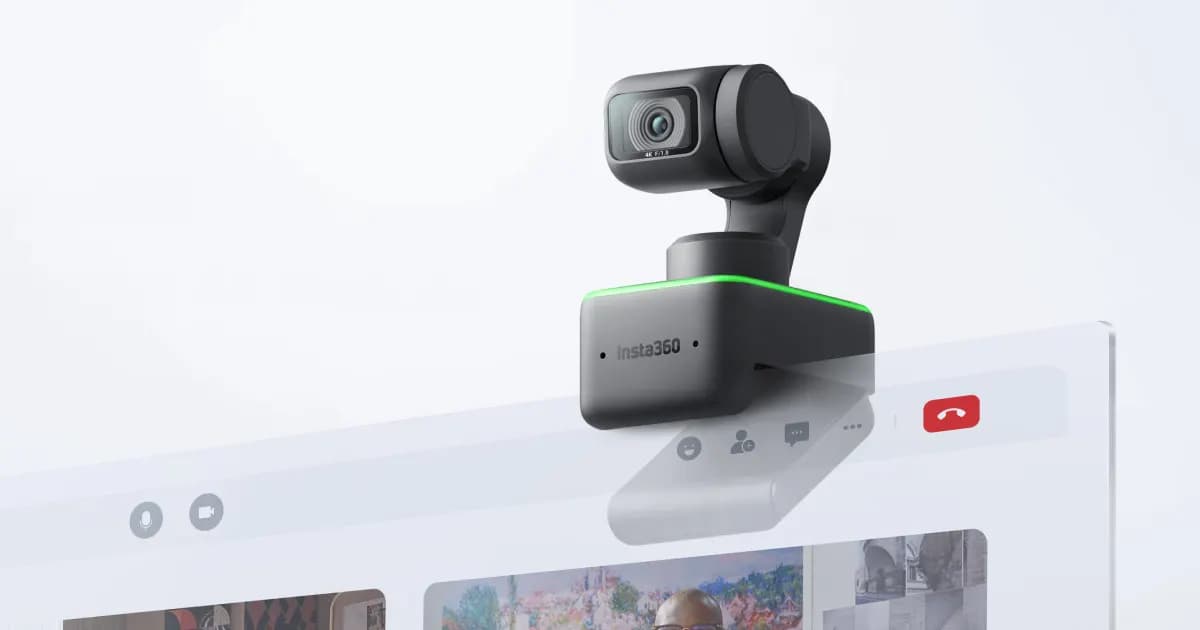
Audited the firmware of five PC peripherals in about 13 hours of agent time
A webcam, monitor, mic, capture card and light, examined in about 13 hours.
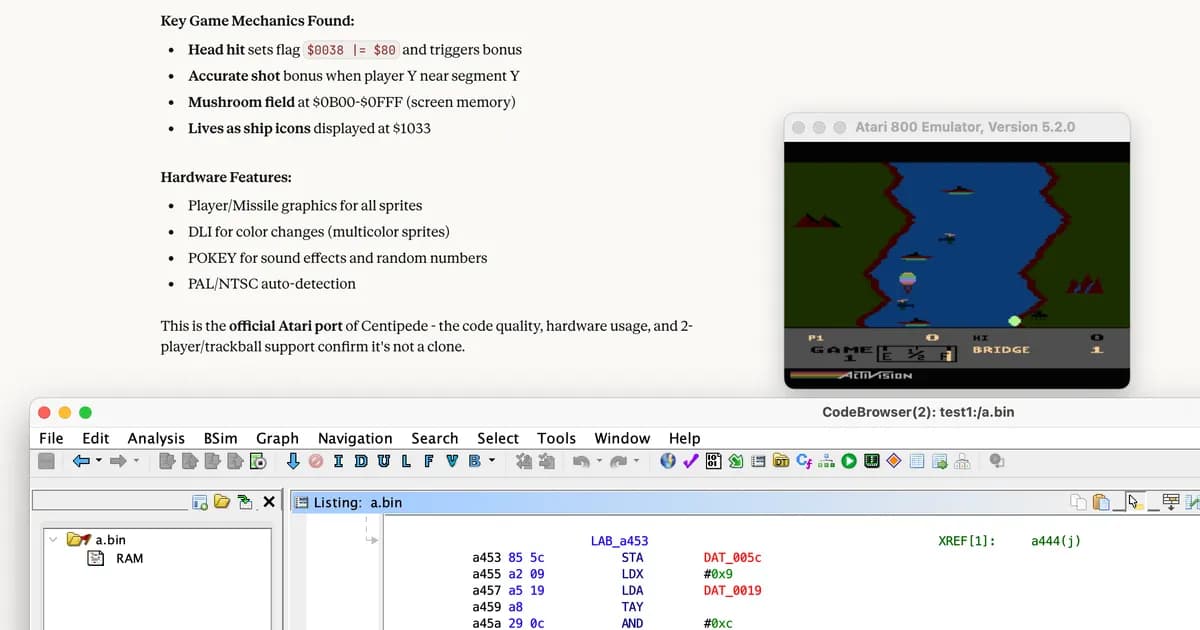
Gave Atari River Raid unlimited lives with Claude driving Ghidra
One byte in an 8 kB Atari ROM, found by Claude driving Ghidra.

Started a decompilation from zero: Claude Code and 51% of a 2001 GBA game
A GBA decompilation started from zero, now past halfway.
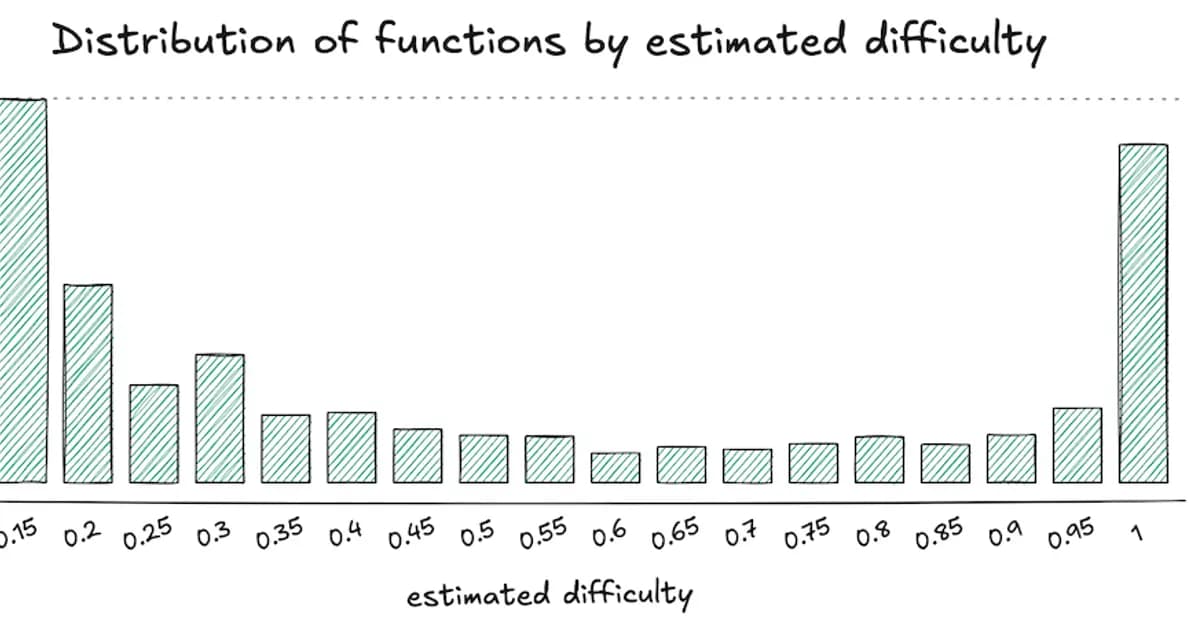
One-shot matching decompilation of Snowboard Kids 2 with Claude in a loop
Three weeks of Claude in a loop beat the previous three months by hand.

Claude code reverse engineered this RC car! It only worked with a custom wyze cam firmware, and now I can drive it over USB or a cheap ESP32
Made an RC car that needed custom Wyze cam firmware drivable over USB or an ESP32
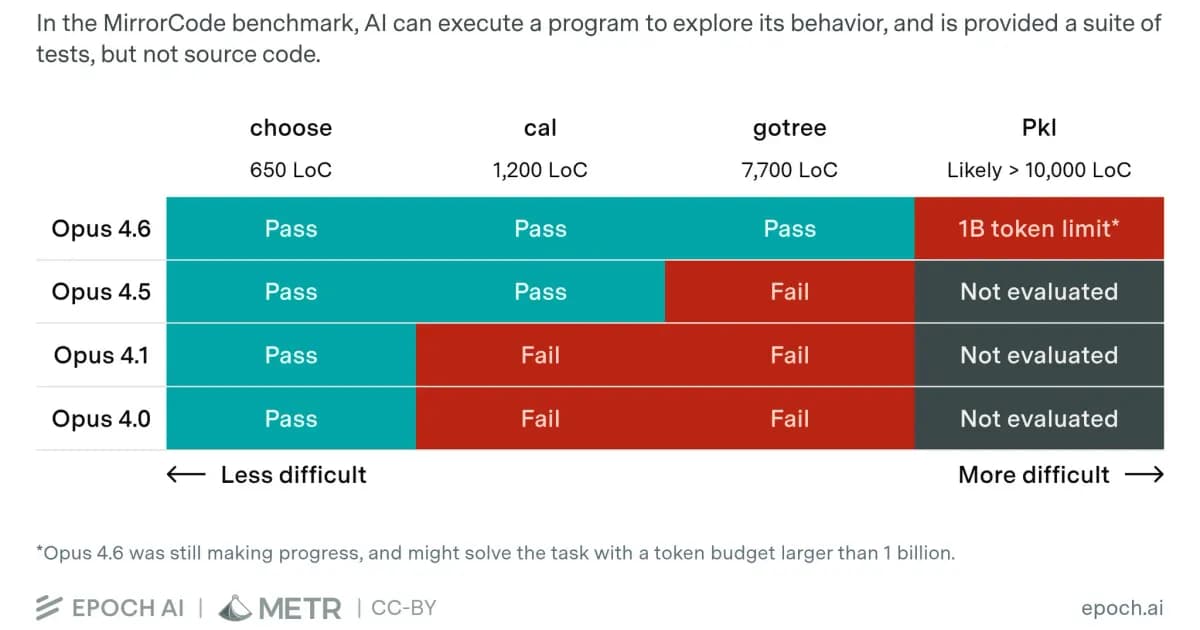
Reimplemented the gotree bioinformatics toolkit from its executable alone
A 16,900-line Go toolkit rebuilt from its binary and tests; earlier Opus models fell short.

Eight-stage malware analysis to test long-horizon agents
How far do frontier models get on an eight-stage malware analysis alone?
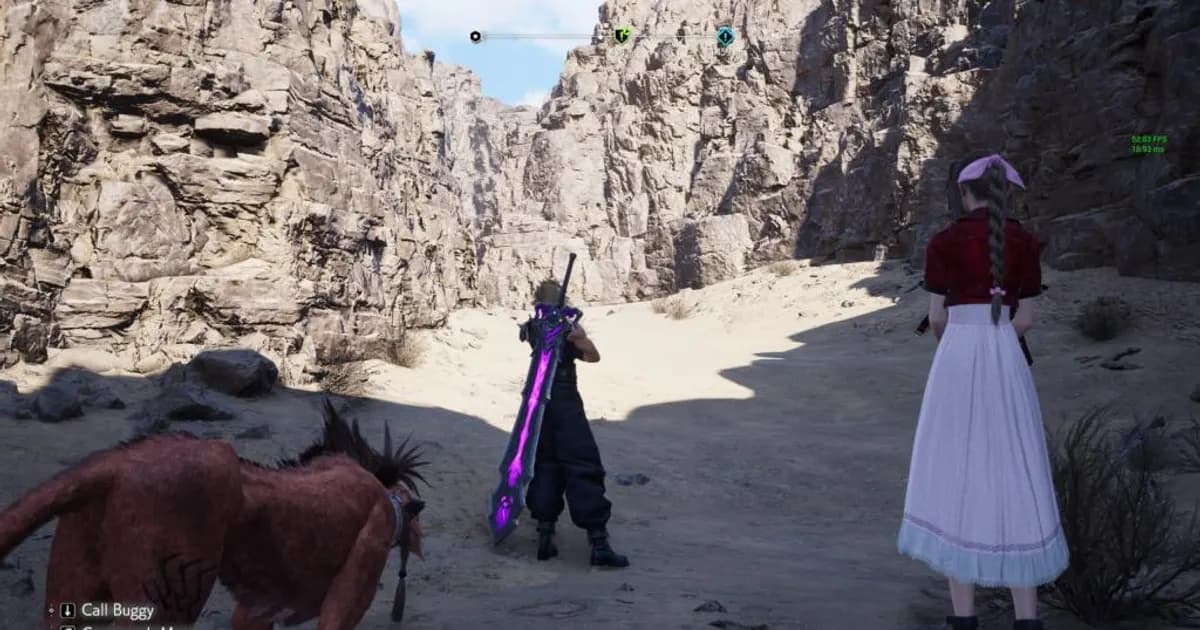
Repaired the FFVIIHook mod after a game update
A game update broke the mod; Claude and Ghidra found what moved.
Share the writeup or repo, and what the AI got right and wrong.
Related guides
Tools these projects used
Common questions
The projects here show Claude handling real tasks, from matching decompilation to protocol decoding, with outcomes listed for each. Results depend heavily on the tools around it and on a person checking the work.
Claude is the model family, such as Opus and Sonnet. Claude Code is Anthropic's agent that runs a Claude model in your terminal and can use tools. Most projects here used Claude Code.
Install an MCP server such as GhidraMCP or REA and register it with Claude Code. The setup guide linked on this page walks through it step by step.