Reverse engineering with Codex and GPT models
This page lists projects where OpenAI models did part of the reverse engineering: the Codex agent, ChatGPT, or a GPT model called directly. Codex runs in a terminal like Claude Code, so it can call disassemblers and other command line tools, and several projects connected it to Ghidra or Binary Ninja through an MCP server. The work covers DOS game reconstruction and ports, lost source recovery for an Electron app, a Bluetooth printer protocol, private API discovery, and defensive malware triage in isolated labs. A few entries are research studies that compared GPT models with Claude and others on the same binaries. Where authors give a model version, time or cost, it is shown on the project page. As with other models, the pattern is that Codex reads and writes code quickly while the person defines the target, tests the output against the original and corrects mistakes. Each entry links the original writeup or repo.
- Projects
- 14
- Outcomes
- Works3Partial5Research6
- Models used
- GPT13Claude7Gemini1
The projects

600+ billion tokens: an agent swarm decompiled a first-person shooter
15+ agents, three months, 99% of a shooter rebuilt in C++.
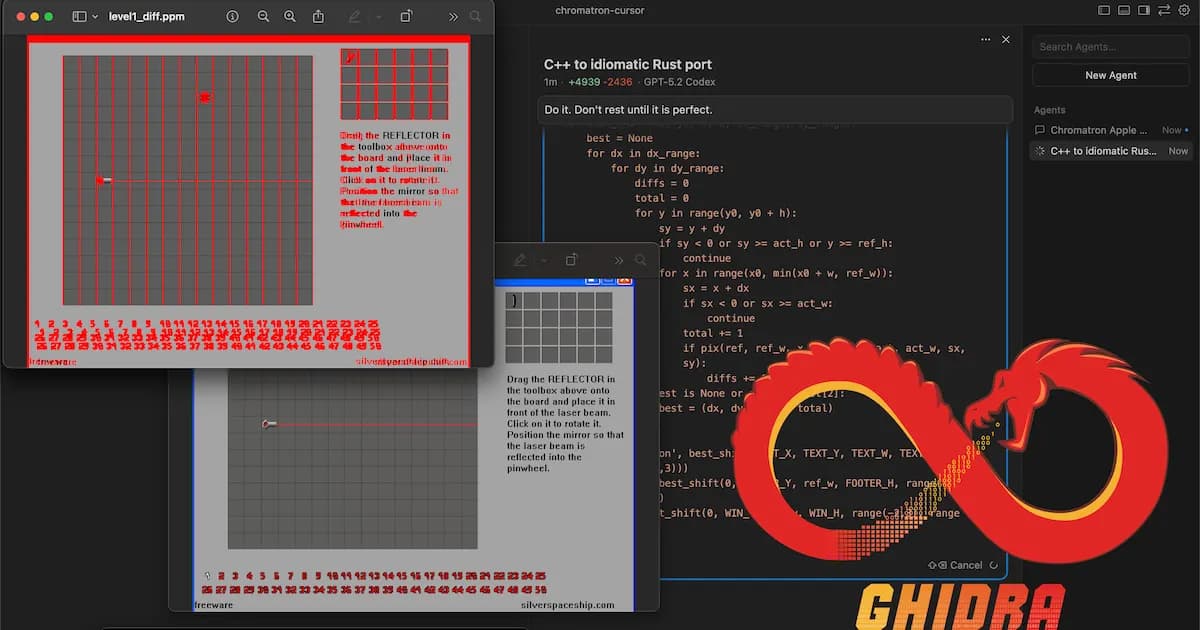
Recompiled a 20-year-old puzzle game for Apple Silicon and the web
A 20-year-old puzzle game, running natively on Apple Silicon and in the browser.

@embirico @OpenAI How I Used Codex to "Recover" Lost Source Code in 5 Days Ever lost your source code? It's a terrible feeling. Years ago, I built an Electron drawing app. Then I lost the source code. All I had left was the compiled version. I thought about rewriting it from scratch, but the
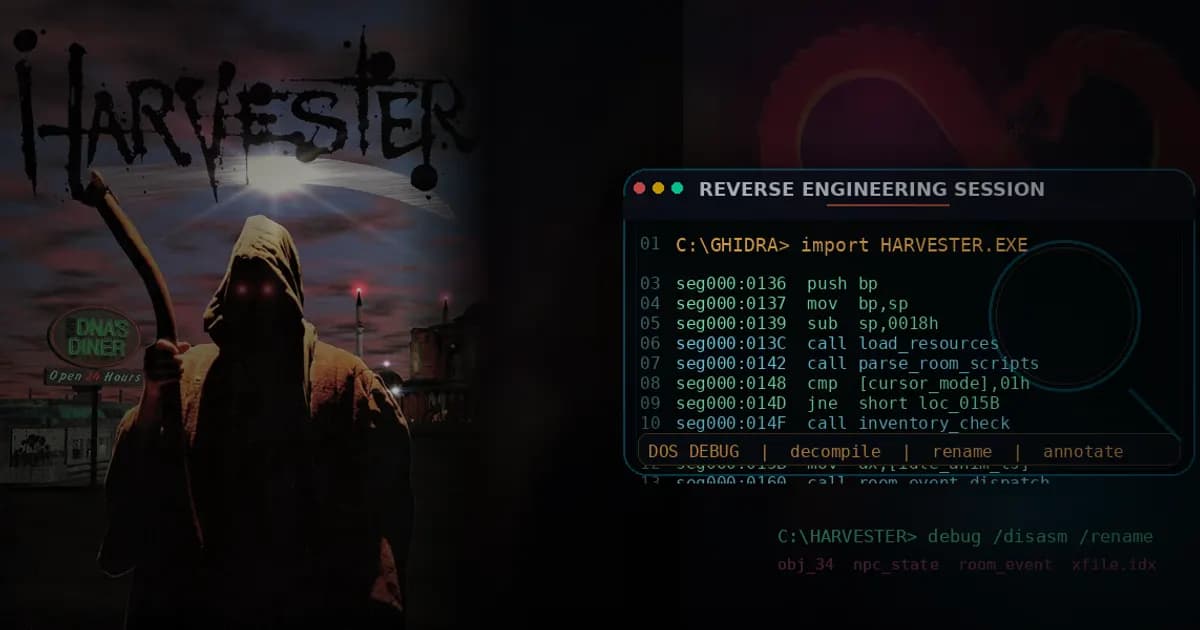
Started a ScummVM engine for the 1996 DOS game Harvester with Codex and GhidraMCP
A ScummVM engine for a 1996 horror adventure, started in about a day.

Used Codex to reverse engineer the Codex CLI and call GPT-5-Codex-Mini directly
Codex reverse engineers its own CLI to reach a model before its API launched.

Eight-stage malware analysis to test long-horizon agents
How far do frontier models get on an eight-stage malware analysis alone?
Share the writeup or repo, and what the AI got right and wrong.
Related guides
Common questions
Yes, when it has tools. Projects here gave Codex access to Ghidra through REA or GhidraMCP and used it to rename functions, rebuild code as C and port games.
Yes. It covers Codex, ChatGPT and GPT models used directly or through other tools, since they come from the same OpenAI model family.
Some research entries ran both on the same samples. Read those writeups for direct comparisons, and see the outcome on each project for a rough picture.