Who did what
None of the 10 commits credits an AI. Many tools add no credit, so this does not show the AI was not used.
Counted from the public git history on 16 Nov 2026. How
Falch provided the data and reference signals, reviewed each result and pointed out problems for Claude to fix. A decode that read -1.6 km/h while parked had to be re-anchored to zero, and invalid 'signal unavailable' values had to be masked out.
What was done
A Claude Code skill correlates raw CAN frames with a reference signal and fits bit positions, scale and offset. It decoded speed and RPM on a Mercedes E350 in under five minutes, plus signals on a Hyundai and an Opel.
Martin Falch of CSS Electronics built a Claude Code skill that reverse engineers proprietary CAN bus signals into DBC files. Given a raw CAN log and a reference signal, Claude decoded speed and RPM on a 2010 Mercedes E350 in under five minutes from OBD2 reference data, plus signals on a Hyundai i10, an Opel Astra and a gauge-to-CAN test module. The README calls it an illustration, not a polished tool, and the article was updated in June 2026.
The skill is a folder of instructions, context material and small Python scripts using python-can and the CANsub interface. Falch says the scripts and SKILL.md were not written or reviewed by Falch personally. Falch gave Claude context, asked it to decode signals, reviewed results and asked for fixes, over 5 to 10 hours.
The method
The workflow builds a bit-activity heatmap to set aside counters and checksums, ranks candidate fields against the reference with windowed Spearman correlation, then brute forces start bit, length, byte order and sign by R² fit. Scale and offset come from a robust line fit, with checks such as reading zero when the vehicle is stopped. References can be OBD2 data in the same log, OCR of a filmed dashboard, or a browser app where a human moves a slider in time with the real value. A reference signal is always needed, and Falch estimates 5 to 10 minutes per signal.
What it found
On the Mercedes, speed and RPM were decoded and merged into one DBC. On the Hyundai, several OBD2 PIDs had no matching proprietary signal found. For the Opel, OCR of the dashboard worked, but the result was scaled to the dashboard reading, which ran about 7% above true speed. With the slider app, Claude decoded the first gauge and inferred the other seven.
Trying it
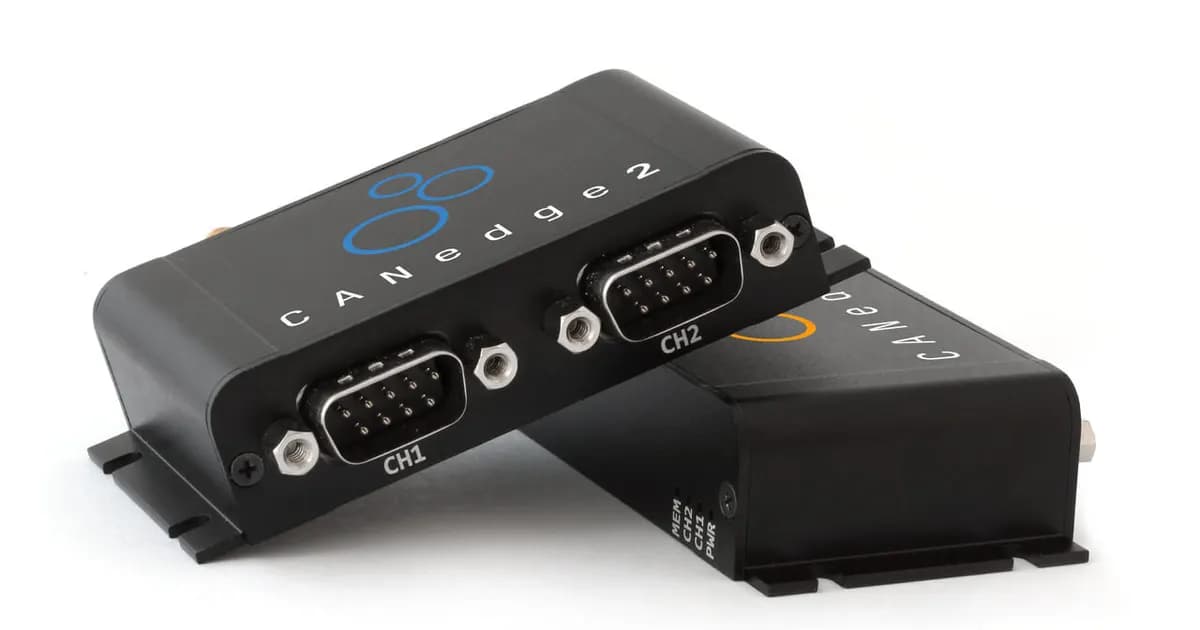
You need Python 3.10 or newer, Claude Code with a Claude subscription or API billing, and for your own car a CSS Electronics CANsub with an OBD2 cable. A sample data pack lets you try it without a vehicle. Clone the repository, install the requirements, open the folder in Claude Code and ask it to decode a signal from a CSV path.
Sources:
- https://github.com/CSS-Electronics/can-bus-reverse-engineering-skills
- https://www.csselectronics.com/pages/can-bus-reverse-engineering-ai-llm-claude
Discussion
Sources
- https://github.com/CSS-Electronics/can-bus-reverse-engineering-skills
- https://www.csselectronics.com/pages/can-bus-reverse-engineering-ai-llm-claude
- https://github.com/collin80/SavvyCAN/discussions/1102
Sources reviewed · Added
An AI model drafted this entry from the sources above. Checked against the sources on 14 Oct 2026. The figures are the author's. How entries are checked. Something wrong? Tell me.