Who did what
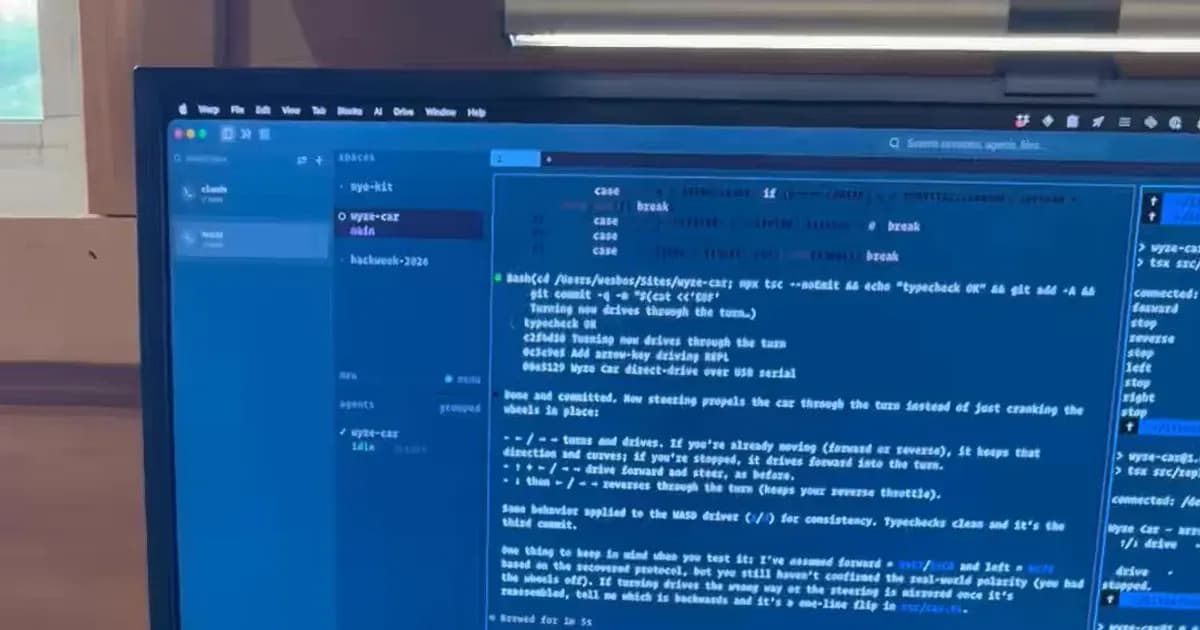
“In August 2026, security engineer Chaz Schlarp pointed Claude Opus 5 at the gadgets sitting next to his keyboard.”
The research was conducted by Chaz Schlarp. The video narration is AI-generated. The findings are presented as a security investigation rather than a technical guide.
What was done
Security engineer Chaz Schlarp used Claude Opus 5 to analyze and compromise the firmware of five consumer gadgets, including a webcam, microphone, monitor, capture card, and light, over thirteen hours of research.
In August 2026, security engineer Chaz Schlarp conducted a research project to audit the firmware of five consumer devices located on his desk. Using Claude Opus 5, Schlarp performed analysis over thirteen hours and 98 prompts to identify security weaknesses. The investigation resulted in the successful compromise of four devices: a webcam capable of recording with its status light disabled, a microphone containing a plaintext command shell, a monitor protected only by a checksum, and a capture card with an unprotected firmware update path. A fifth device, an Elgato Key Light Mini, utilized cryptographic signing, though Schlarp reports that this check could be disabled. The research utilized the re-shell reverse engineering environment, available at https://youtube.com/watch?v=C1d24i-Z7nU. The project demonstrates the application of AI agents in identifying vulnerabilities in hardware that typically undergoes limited security auditing.
Discussion
Sources
Sources reviewed · Added
An AI model drafted this entry from the sources above. Checked against the sources on 28 Nov 2026. The figures are the author's. How entries are checked. Something wrong? Tell me.